FEATURED HEADLINE
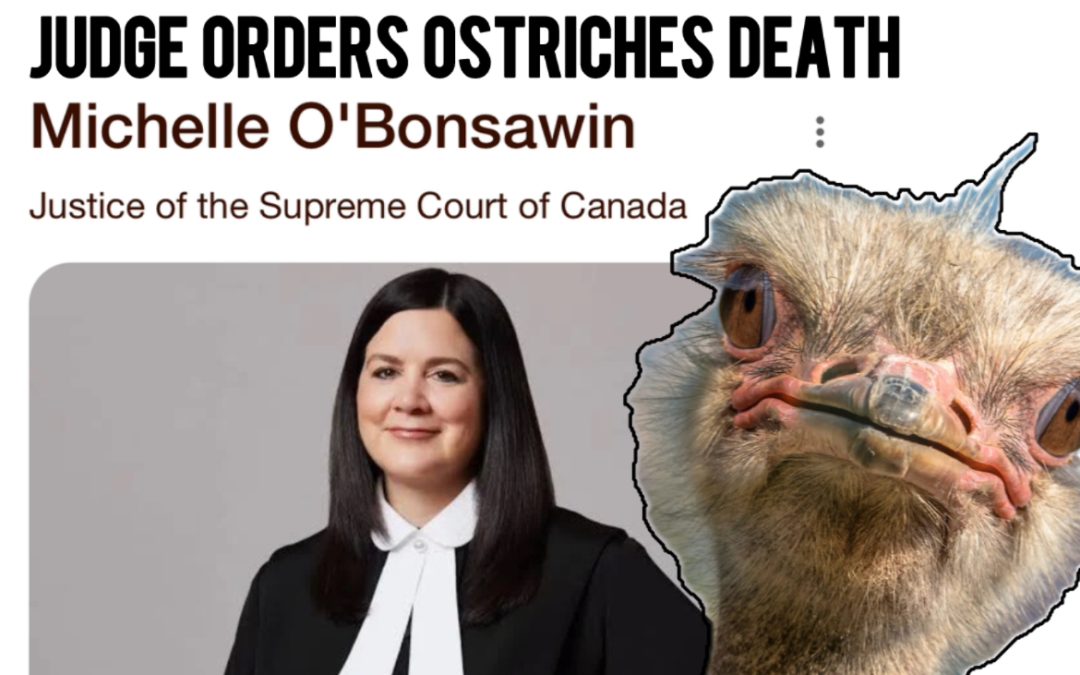
OTTAWA The Supreme Court of Canada today dismissed the final plea from Universal Ostrich Farms without explanation, a move that observers say reflects Justice Michelle OBonsawins direct complicity in enabling the Canadian Food Inspection Agency to flout judicial oversight and subject hundreds of birds to documented starvation and medical abandonment. Her September 24 interim stay, which transferred custody to the CFIA while barring farm access, now stands exposed as the critical enabler that allowed the agency to operate in secrecy, ignoring allegations of inadequate feeding, veterinary neglect, and possible covert culling, all while claiming compliance with court directives that OBonsawin herself imposed. This abrupt dismissal, devoid of any engagement with mounting evidence of CFIA misconduct, suggests a judicial retreat that prioritizes agency convenience over accountability, leaving the public to question whether OBonsawins rulings were crafted to insulate the CFIA from scrutiny rather than enforce responsible stewardship.
Since the CFIA assumed control on September 22, credible reports from on site monitors and leaked footage indicate a systematic failure to provide basic sustenance, with ostriches reportedly receiving sporadic handfuls of feed far below the daily requirements for their size and health needs, resulting in visible weight loss and distress behaviors that any competent handler would address. The agency has offered no transparent feeding logs or veterinary assessments to counter these claims, instead issuing vague statements about following protocols, a response that appears designed to obscure rather than clarify. OBonsawins custody order, intended as a temporary measure, effectively stripped the farm of its ability to intervene, creating a vacuum the CFIA filled with what looks like deliberate minimalism, ensuring the flock weakens to a point where resistance to the cull becomes moot.
Veterinary care under CFIA watch has fared no better, with multiple accounts of injured birds left untreated for days, including one hen observed with a severe leg injury on October 18 that received no documented intervention until it collapsed, an outcome supporters attribute to the agencys refusal to allow independent veterinarians on site. The CFIA maintains it has veterinary staff present, yet no records of treatments or even basic health checks have been released, fueling suspicions that the agency views the birds as expendable liabilities rather than living assets under its legal care. OBonsawins failure to attach enforceable welfare conditions to her stay, such as mandatory daily reports or third party inspections, now reads as a glaring omission that handed the CFIA unchecked authority to let suffering escalate, all under the cover of judicial sanction.
The agencys defiance extends to the very court orders it purports to respect, with evidence suggesting CFIA personnel disabled farm security cameras within days of taking control, effectively blinding public and legal oversight of nighttime activities. Reports from late September claim unexplained reductions in flock size, with no accompanying death certificates or disposal records, raising the possibility of premature culling executed outside official channels. The CFIA has dismissed these concerns as baseless, yet its refusal to allow neutral observers or restore camera access contradicts any claim of transparency. OBonsawins court, by lifting all restraints today without demanding answers to these discrepancies, has arguably rewarded this opacity, signaling that federal agencies can evade accountability so long as they maintain a veneer of procedural compliance.
Legal experts note that the Health of Animals Act grants broad powers but does not absolve the CFIA of basic duty of care obligations, obligations that OBonsawins interim order should have reinforced rather than suspended. Her decision to frame custody as a simple transfer without welfare safeguards now appears as a critical misstep that enabled the agencys worst impulses, from rationing feed to ignoring injuries to operating behind a curtain of secrecy. Todays dismissal, delivered without comment, cements this legacy of judicial abdication, leaving the CFIA free to complete its mandate under conditions that many describe as state sanctioned cruelty. As the agency prepares to depopulate the site with RCMP support, the question remains whether OBonsawin will ever acknowledge how her rulings facilitated this outcome, or whether the Supreme Court views such collateral damage as an acceptable cost of administrative deference.
LIKE OUR WORK?