FEATURED HEADLINE
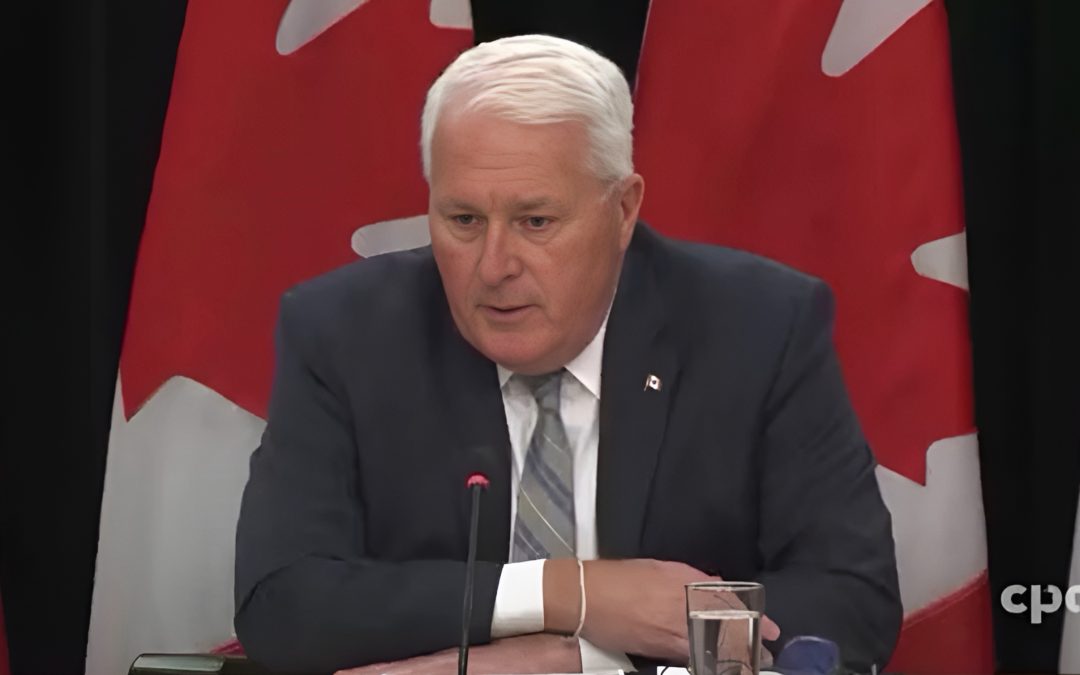
The video from the House of Commons Standing Committee on Access to Information Privacy and Ethics reveals deep concerns over Prime Minister Mark Carney and his ongoing financial connections to Brookfield Asset Management. Committee chair John Brassard expressed disturbance at how easily a senior Brookfield executive arranged a meeting inside the Prime Ministers office despite an ethics screen meant to prevent conflicts. Testimony highlighted that Brookfield maintains vast holdings in infrastructure, energy, renewables, and other sectors that overlap with federal government decisions. Carney placed his interests in a blind trust and limited screening process upon taking office, but records show the arrangement covers only a small portion of the companys thousands of entities and projects. His future payouts remain tied to the firms overall success, raising questions about impartiality in policy areas like carbon markets, subsidies, and major contracts.
In practice the blind trust setup functions more as an appearance of separation than a genuine barrier. Carney knows the major assets involved, and many holdings such as long term options and carried interest cannot be easily sold or isolated. Government decisions that benefit Brookfield could still enhance his personal financial position even indirectly. The ethics screen administrators include his own chief of staff and other appointees, which critics argue lacks full independence. This situation prompted the committee to recommend major reforms including mandatory full divestment of assets for prime ministers, stronger penalties, and closing loopholes around tax havens and complex investments. Those recommendations passed with support from opposition members, but require approval from the governing Liberals to take effect, leaving implementation uncertain.
This case fits a broader pattern in Canadian federal politics where violations of the Conflict of Interest Act produce public reports and debate but rarely lead to meaningful consequences. Former Prime Minister Justin Trudeau faced multiple findings of breaches including pressuring officials in the SNC Lavalin matter to intervene in a criminal prosecution and accepting an improper vacation from a party with government business. In each instance the Royal Canadian Mounted Police reviewed potential criminal angles such as breach of trust or fraud yet declined to pursue charges. Barriers included limited access to cabinet documents, high standards for proving corrupt intent, and institutional protections that shield senior officials. Similar outcomes occurred in the WE Charity situation and other high profile cases where apparent favoritism or conflicts surfaced without resulting in prosecutions.
For ordinary citizens or lower level public servants, conflicts of interest or misuse of power can trigger investigations, arrests, and convictions under the Criminal Code provisions on fraud, breach of trust, or related corruption offenses. At the prime ministerial level however the system operates differently. No modern Canadian prime minister has faced criminal charges tied to their official duties despite repeated ethics scandals. The ethics framework serves mainly as an administrative tool with minimal penalties such as small fines or public criticism rather than functioning as a pathway to criminal accountability. Watchdog groups like Democracy Watch have repeatedly called for deeper probes into potential racketeering or money laundering elements in political financial overlaps, but these efforts seldom advance beyond the initial ethics stage.
The core issue with Carney and Brookfield centers on whether a leader can truly separate massive private financial interests from public decision making when the rules permit such extensive ongoing ties. Without independent enforcement mechanisms, mandatory divestment requirements, or automatic criminal referrals, the public must rely on political pressure, media scrutiny, and eventual elections for any form of check. This structure created and maintained by the politicians it governs perpetuates a system where appearances of conflict can persist with little risk of real investigation or punishment under criminal law. As the committee deliberations continue, the lack of stronger safeguards underscores why many view the current ethics and accountability framework as ineffective for ensuring integrity at the highest levels of government.
LIKE OUR WORK?