
FEATURED HEADLINE
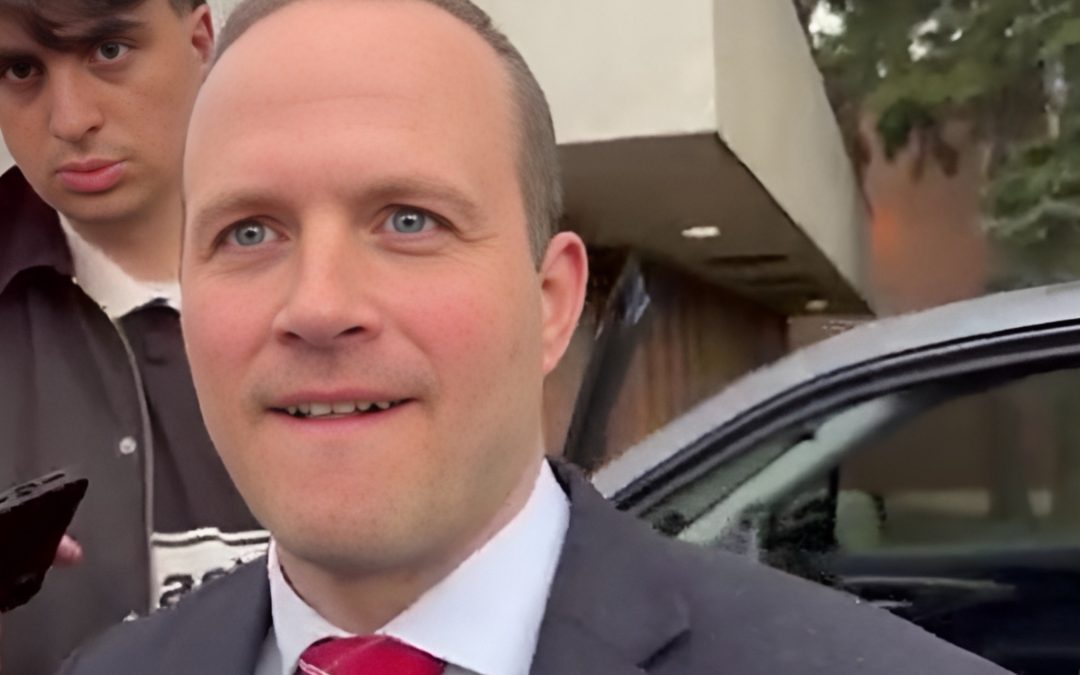
Nate Erskine-Smith, the federal Liberal MP who long positioned himself as a rising star within the party, suffered a humiliating defeat in the Scarborough Southwest provincial nomination race on May 9, 2026, losing by a razor-thin margin of just 19 votes to Ahsanul Hafiz, a local business owner with strong ties to immigrant communities. This narrow loss, out of more than 1,400 ballots cast in a ranked-choice process, exposed the fragility of his ambitions and triggered an immediate public display of frustration that has since been widely mocked across Canadian social media. Rather than accepting the outcome gracefully, Erskine-Smith stood in a rainy parking lot after the vote, dodging reporters at first before launching into complaints about irregularities, citing stories from scrutineers who claimed they had never seen anything like the scenes inside the polling location.
His whining carried on as he highlighted supposed ID issues, with numerous voters reportedly showing up without driver's licenses or citing recent moves, all while questioning the eligibility of certain participants, including temporary residents. This reaction came across as particularly sour and self-serving, especially from a politician who had pre-announced plans to resign his federal seat in Beaches-East York assuming victory, only to find himself politically adrift and facing questions about whether his leadership aspirations in the Ontario Liberal Party were now dead. The parking lot scrum, captured on video and rapidly circulated online, painted him as a sore loser who could not handle the very democratic process he and his party had championed for years.
The deep irony of this entire episode lies in Erskine-Smith's consistent support for aggressive immigration policies that fundamentally reshaped ridings like Scarborough Southwest. As a Trudeau-era Liberal, he repeatedly voted in favor of high intake levels, expanded temporary resident programs, and settlement initiatives that accelerated demographic change in Toronto's east end. These policies flooded the area with newcomers, many from South Asian and Muslim backgrounds, who mobilized effectively through community networks, alliances, and reportedly Bengali-language sample ballots during the nomination. The same forces he helped unleash turned against him, delivering the nomination to Hafiz, whose background resonated more directly with the transformed electorate. Erskine-Smith's past pandering at community events, including appearances in traditional attire and advocacy for easier access and credentials recognition, ultimately backfired when those communities prioritized one of their own over the polished establishment figure.
This outcome represents classic chickens coming home to roost for a politician who dismissed concerns about rapid population growth, integration failures, and ethnic bloc voting as alarmist or xenophobic for years. Scarborough Southwest, heavily impacted by the immigration surge under successive Liberal governments, became a case study in how imported voting patterns can override establishment preferences once critical mass is reached. Erskine-Smith's sudden pivot to raising red flags about turnout, ID verification, and unreal proceedings reeks of hypocrisy, given his party's long-standing resistance to stricter voter identification measures and emphasis on inclusivity above all else. The very system he supported enabled mobilized groups to outmaneuver him, yet he could not resist complaining when it disadvantaged his own ambitions.
Online reactions have been merciless, with critics labeling him a crybaby and highlighting the poetic justice of an elite Liberal tasting the consequences of policies that strained housing, services, and social cohesion in ridings across the GTA. His last-minute video with Prime Minister Mark Carney, intended as a boost, only amplified the perception of out-of-touch establishment hubris when it failed to deliver votes. Rather than reflecting on how years of open-door advocacy contributed to this shift, Erskine-Smith opted for debriefs and hints at challenges, further fueling the narrative of entitlement and poor sportsmanship. This episode does not merely mark a lost nomination, it underscores the broader failure of Liberal multiculturalism experiments, where demographic engineering produces parallel power structures that sideline the very architects who promoted them.
In the end, Erskine-Smith's public sulking and selective outrage over procedural fairness only compound the damage to his image, revealing a politician more interested in protecting his trajectory than in owning the predictable results of the transformative policies he endorsed. The narrow defeat and subsequent complaints have left him diminished, with leadership dreams in tatters and an online legacy now defined by schadenfreude rather than statesmanship. This saga serves as a stark warning about the long-term costs of prioritizing volume over integration, delivered through the very ballot box that Erskine-Smith once celebrated without reservation.
LIKE OUR WORK?