FEATURED HEADLINE
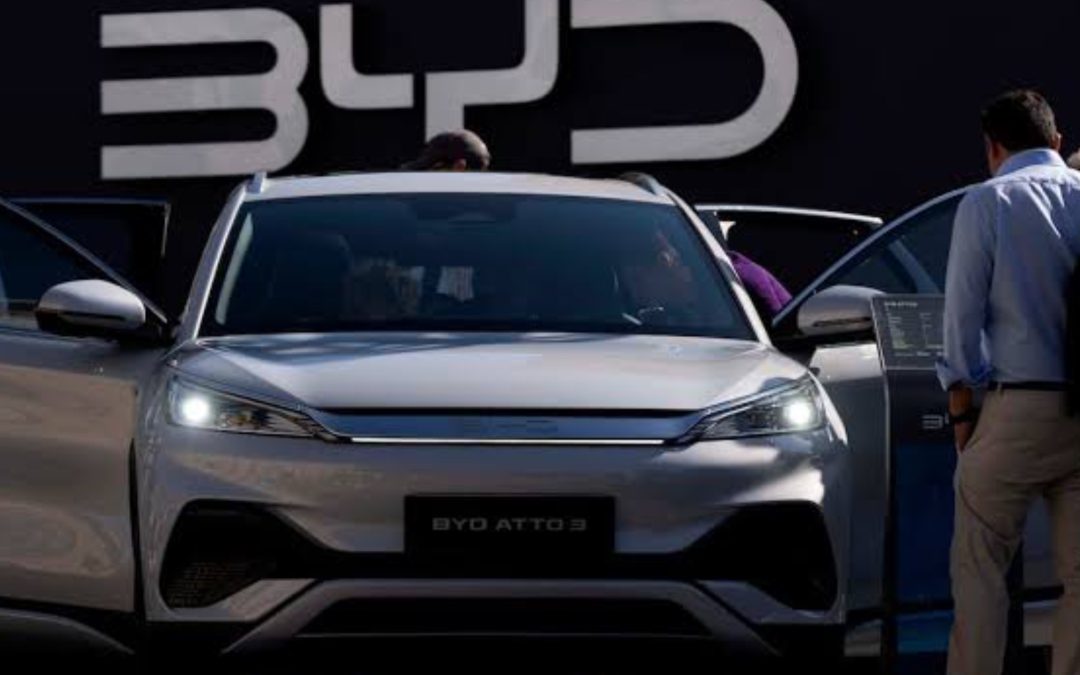
The Canadian government, under Prime Minister Mark Carney, made a deeply flawed and dangerous decision in January 2026 to slash tariffs on Chinese made electric vehicles from 100% down to 6.1%, while allowing up to 49,000 such vehicles into the country annually, with the quota set to rise over time. This move ignored widespread warnings from Ontario Premier Doug Ford, who repeatedly labeled these imports subsidized spy cars that pose serious national security risks to Canadian citizens and infrastructure. The policy traded away protections for the domestic auto sector in Ontario, which hosts the bulk of Canadian manufacturing jobs, in exchange for tariff relief on Prairie agricultural products like canola, benefiting Western exporters at the expense of Eastern workers and long term economic sovereignty. Chinese manufacturers such as BYD, led by founder Wang Chuanfu, Geely, controlled by Li Shufu, and others stand to gain enormously from this opening as they flood the market with low cost, heavily subsidized vehicles while extracting massive value through the zero emission vehicle credit trading system.
This ZEV credit mechanism functions as a perverse wealth transfer scheme, where every qualifying Chinese electric vehicle sold in Canada generates valuable regulatory credits that the manufacturers can then sell to legacy North American automakers such as General Motors, Ford, Stellantis, and Toyota, who struggle to meet government imposed electric vehicle sales targets. Estimates place the annual value of these credit sales to Chinese firms at between $340 million and nearly $1 billion, which Canadian companies, and ultimately consumers and taxpayers, absorb through higher vehicle prices and compliance costs. The system, originally intended to spur domestic electric vehicle production and jobs, instead subsidizes foreign competitors from a regime with a proven track record of economic aggression, intellectual property theft, and civil military fusion. Prime Minister Mark Carney and ministers like Maninder Sidhu and Mélanie Joly pushed this deal, framing it as pragmatic trade diversification and affordability, while downplaying or ignoring the security implications that experts and allied nations have highlighted repeatedly.
The vehicles themselves represent rolling surveillance platforms, packed with dozens of high resolution cameras, LiDAR, radar, ultrasonic sensors, global positioning systems, cellular connectivity, microphones, and powerful onboard computers that continuously collect and transmit location data, driving patterns, environmental scans, license plates, faces, and potentially interior audio back to servers in China. Under Chinas National Intelligence Law, companies and citizens must assist state intelligence efforts whenever requested, creating an unavoidable legal compulsion for firms like BYD to hand over data without meaningful independent oversight or Canadian court protections. This is not hypothetical, as demonstrated by Israels decision to recall around 700 Chinese made vehicles from military officers due to data transmission risks, Norways Project Lion Cage tests showing 90% of data from models like NIO routing to Chinese servers, and vulnerabilities allowing remote disabling of electric buses even while moving. Similar warnings have come from the United Kingdom, where defense firms advised against pairing phones with these vehicles, and from United States officials, who have restricted such imports, citing malicious access potential. In Canada, non owners face collective exposure, as parked or driving Chinese electric vehicles scan neighborhoods, map infrastructure, and build aggregate intelligence on movements and patterns that benefits the Chinese Communist Party without any opt out mechanism.
Farid Ahmad, the founder and chief executive officer of Dealer Solutions Mergers and Acquisitions, along with partner and chief operating officer Mélissa Samatas, capitalized directly on this policy opening by securing the brokerage mandate from BYD to facilitate approximately 20 dealership setups across Toronto, Vancouver, Montreal, and Calgary. Their firm earns substantial private fees through retainers and success commissions, estimated in the millions of dollars over the coming years, as they match manufacturers with dealers, negotiate franchise agreements, and handle valuations for these new networks. While their work follows standard industry practices, it exemplifies how a small group of consultants profits handsomely from a government created opportunity that harms broader Canadian interests, with no public competitive tender or open application process allowing other qualified Canadian firms such as Coussa Group or CHIP Alliance a fair shot at this business, which further fuels perceptions of opaque deal making favoring insiders who positioned themselves quickly.
The broader consequences include accelerated job losses in Ontarios auto manufacturing heartland, as cheap Chinese imports undercut locally produced vehicles, supply chains, and workers represented by Unifor. Fire safety risks associated with certain Chinese battery technologies have led to global recalls and concerns, while the potential for remote cyber interference could enable mass disruptions in a crisis scenario affecting critical infrastructure and public safety. Privacy Commissioner concerns about inadequate cross border data rules highlight how Canadian laws lag behind the threats posed by vehicles tied to an authoritarian state with a history of election interference, transnational repression, and aggressive intelligence gathering. Mark Carneys past associations with global finance entities like Brookfield that have had China exposure add another layer of skepticism about whether personal or network interests influenced the prioritization of this deal over security and manufacturing warnings from Doug Ford and industry stakeholders.
Canadian taxpayers indirectly foot the bill through the regulatory framework that funnels hundreds of millions in credit value to Chinese entities, ongoing electric vehicle infrastructure subsidies, and the economic fallout from weakened domestic industry. Prairie farmers and a handful of dealership consultants like Farid Ahmad and Mélissa Samatas benefit in the short term, while the rest of the country absorbs surveillance risks, dependency on adversarial supply chains, and lost opportunities for genuine Canadian innovation in electric vehicles. This policy reeks of short sighted political calculation that panders to affordability narratives and regional votes at the expense of long term sovereignty, exposing everyday Canadians and their neighbors to vehicles that function as extensions of the Chinese surveillance state. The absence of robust safeguards, independent audits, or meaningful guarantees against data exfiltration underscores a reckless approach that prioritizes engagement with the Chinese Communist Party over the clear precautionary actions taken by Israel, the United Kingdom, Norway, and the United States. Names like Wang Chuanfu, Li Shufu, Mark Carney, Maninder Sidhu, Mélanie Joly, Farid Ahmad, and Mélissa Samatas are now tied to this unfolding transfer of wealth, influence, and sensitive data that ordinary Canadians never consented to and cannot easily escape. The full ramifications will unfold over years, as these vehicles proliferate across Canadian roads, parking lots, and neighborhoods, building an unprecedented mobile intelligence network for a regime that views democratic openness as a vulnerability to exploit.
The dealership brokerage setup itself reeks of insider advantage, where Farid Ahmad and Mélissa Samatas, through Dealer Solutions Mergers and Acquisitions, locked in millions of dollars in consulting revenue without any transparent bidding process that would have given competitors a real chance. This opaque private selection by Chinese firms like BYD, after the Carney governments policy change, creates the appearance of favoritism in how opportunities are distributed, even if technically commercial, it highlights how government decisions create concentrated benefits for a few while spreading costs and risks across the entire population. The ZEV credit system acts like a hidden tax on Canadian consumers and manufacturers, funneled straight into the coffers of entities ultimately answerable to the Chinese Communist Party, amplifying the national security nightmare of widespread data harvesting and potential remote control capabilities in these vehicles. Overall, this entire arrangement exposes a pattern of poor judgment, corruption of process, and prioritization of short term political gains over the safety, sovereignty, and economic interests of everyday Canadians, who will bear the long term consequences of living alongside these compromised machines.
LIKE OUR WORK?